Creating Psychological Safety in the Workplace with Amy C. Edmondson
An interview with Amy C. Edmondson by Curt Nickisch
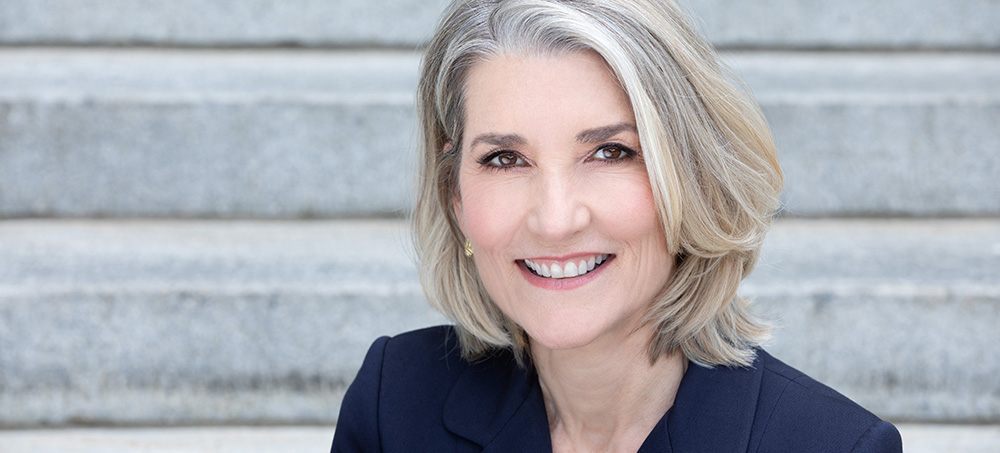
It was the late 1990s. Medical mistakes at hospitals were a big problem, and researcher Amy Edmondson had a moment of panic.
She had been studying different teams in the same hospital. She wanted to know: Do better teams make fewer mistakes? What she found was the opposite of what she expected.
Turns out, the most effective hospital teams, according to a validated team survey, reported making more mistakes, not fewer. She then wondered whether the better teams might not actually be making more mistakes—rather, perhaps they were more able and willing to talk about their mistakes.
This study was published in a 1996 paper called “Learning from Mistakes Is Easier Said Than Done,” which called attention to how differences in interpersonal climate affected willingness to speak up about mistakes. She argued that organizations could not easily learn from mistakes that remain hidden. To follow up on this incidental finding, Edmondson purposefully set out to study interpersonal climate. This soon led to Edmondson’s influential 1999 paper, “Psychological Safety and Learning Behavior in Work Teams.” Since then, the research has piled on, showing that psychological safety can make not just teams, but entire organizations, perform better.
Amy Edmondson is a professor at Harvard Business School and author of multiple books, including Right Kind of Wrong: The Science of Failing Well and The Fearless Organization: Creating Psychological Safety in the Workplace for Learning, Innovation, and Growth. In this interview, she discusses what she has discovered about psychological safety since her original research was published.
Curt Nickisch: You’ve learned a lot about psychological safety over the last couple of decades. Now you say it’s not the best term. Why not?
Amy C. Edmondson: The term implies to people a sense of coziness—“Oh, everything’s going to be great”—and that we’re all going to be nice to each other. That’s not what it’s really about. It’s about candor, about being direct, taking risks, and being willing to say, “I screwed that up.” It’s being willing to ask for help when you’re in over your head.
Why is it that probably more people would say that they don’t feel psychologically safe at work than others? It still seems like it’s not the norm.
Psychological safety is not the norm at all. In fact, I think it’s unusual, which is what potentially makes it a competitive advantage. The reason why psychological safety is rare has to do with aspects of human nature, human instinct. For example, it is an instinct to want to look good in front of others. It’s an instinct to divert blame, to agree with the boss. And in hierarchies, these instincts are even more exaggerated.
We want to look good in general, but we especially want to look good in a hierarchy. A spontaneous way to try to achieve that goal is to stay quiet unless you’re sure that what you have to say will be well received, especially by the higher-ups.
These are phrases we know, like “better to be safe than sorry,” “don’t rock the boat . . .”
Right, “don’t rock the boat,” “no one ever got fired for silence.” We tend to play not to lose, right? We stay safe: We want to look good. We want to perform well. Learning is great, but not in front of people. No one likes the part of learning that involves failing along the way.
I want to learn from when that other person does it.
Right, vicarious learning. Do I have to learn firsthand that this doesn’t work and have everybody see my failure? I’d rather not.
What’s an example of a company that has mastered psychological safety in the workplace and has gained a competitive advantage?
One industry that is very challenging to succeed in—and to do so consistently—is the movie industry. Most companies making movies will have an occasional hit and then a few flops.
Pixar, though, is a company that has had 17 critically acclaimed major box office successes in a row. This is unheard-of success. Ed Catmull, cofounder and longtime leader, worked very deliberately to create and keep creating a psychologically safe environment where candor is expected and possible, especially in the form of providing critical feedback—that is, negative feedback—about a film being made.
They do this in two fundamental ways. One is behavioral, the other structural. For behavioral, Catmull will often say things like “Here’s the mistake I made,” because leaders have to go first. Leaders must show that they know that they’re fallible human beings. Catmull does this when he shows up with humility, curiosity, interest, and acknowledged fallibility.
On the structural side, meetings and sessions are set up so as to design in thoughtful ways to make it easier to give each other candid feedback or to really critique a movie. He’ll say things like “Early on, all of our movies are bad. They’re terrible.” He says that not because that’s necessarily good news, but because he wants everyone to know that it’s just part of the journey. There is no way to get to magnificent unless they are willing to go through bad and inadequate and sappy and boring along the way. And so they just keep pushing back and making it better.
Let’s talk about how to do this. If people want to create a fearless organization, what do they need to do?
There are three temporal steps—three types of activities that you have to do as a leader—but I want to be clear it’s not one and done. You have to keep doing them often. The first one is setting the stage, the second is inviting engagement, and the third is responding productively.
Setting the stage means getting people on the same page about the nature of the work we’re doing or the nature of the project we’re working on. What are the most important variables in the work we’re doing? How much uncertainty do we face? How much complexity, how much interdependence? The more the work is uncertain or complex, the more anyone’s voice could be essential to our success.
This is where confidence comes into play, right? It’s easy to speak up when you know what you say will be well received, especially by the higher-ups. It gets harder if you’re not sure and in a complex place—exactly what you’re talking about. That just means that confidence levels across the team, across the organization, across the project, whatever it is, are lower, and you have to increase safety so that people still feel that they could speak up when they’re not sure.
Right. Each one of us is always setting the threshold for when we will speak up and what we will speak up about. I’m not saying we set this threshold consciously, but rather that we naturally size up the interpersonal context to figure out what seems acceptable. We implicitly calculate the cost-benefit equation to arrive at a place where I might, for example, speak up if I’m 50% confident this is an OK thing to say, in this setting. And maybe for someone else it’s 40% or 60%. But we implicitly assess the safety for speaking up about something that is not guaranteed to be a welcome contribution.
“I’ll do it once a week.”
Yeah. What leaders need to do is just keep trying to push that threshold back down to lower than is natural or instinctive. By reminding us of what’s at stake, by reminding us of the uncertainty or complexity, I’m saying, “You know, it really matters. Your voice might make the difference.” In doing this, I’m creating the logical case for voice.
What’s an example of this?
Julie Morath, chief operating officer at Children’s Hospital and Clinics in Minneapolis, Minnesota, emphasized repeatedly that healthcare delivery by its nature is a complex, error-prone system. Why say that? It’s obvious, right? Why say it aloud? It’s about reminding people of that reality. It’s saying, “Things are just as likely to go wrong as to go right. Speaking up saves lives.”
Our default mental model is that the work is like work in a factory—the results are all but guaranteed if we follow the right process. With this mindset, people think, “We’re supposed to know what to do. We’re supposed to execute. We’re supposed to hit our targets.” And yes, we do want people trying hard to perform well, but when we assume, a priori, that we know what the right metrics are and that everything will go as planned so long as everyone tries hard, we’re missing something important. We are missing the actual uncertainty and complexity that lurks around every corner.
Do managers ever run the risk of appearing too soft when they do that?
Many managers worry about that risk. And as a result, they often feel that it’s easier to just give the metrics, to appear hard-nosed. But it’s also out of touch with reality. The more we’re in new, uncertain, or complex territory—and so many organizations are in that kind of territory with at least some part of their activities, especially on the innovation side—the more psychological safety matters. So this is why people, like Ed Catmull, say things like, “We need to hear from you. What ideas do you have? Let’s test them quickly.”
Or take Astro Teller at Google X: This is a moonshot organization. Most of what they work on probably won’t work, but project leaders say things like “We are going to really give it our all. We’re going to learn fast in doing so.” Leaders who do this well are anything but soft. They’re driven, passionate, and compelling, but they’re not soft. They do have empathy.
And curiosity—they’re trying to understand what’s keeping us from getting there.
Yes. They understand human beings. They know what they’re asking isn’t necessarily going to be easy, so they have empathy for that. But they’re not going to give up. There’s too much at stake.
What’s the next step?
What happens next is realizing that you’ve got to be proactive as a leader. You’ve got to invite participation. And what I really mean by that is you have to ask questions.
Ask people directly: What are you seeing out there? I need to hear from you. What ideas do you have? What help can I offer? When I ask a real question, a genuine question, and when I listen carefully to the response, I’m creating a moment—and hopefully more—of psychological safety. I’m saying I’m genuinely interested in what you have to say. Maybe what you have to say is a little bit threatening and you’re reluctant to say it, but I’m giving you that room to do it.
It is amazing what you can ask somebody if they believe that you care, right? You can ask them anything.
You really can. If they believe you care, they will offer more of themselves, their ideas, their questions, and their concerns, and they will contribute to the situation—and also gain and learn as a result.
Is there ever a danger of too much psychological safety?
I don’t think you can have too much psychological safety. You can have people speaking too much, and they need and deserve our feedback. Most people want to be effective. They need feedback about how effective they’re being, but it is not a great idea to try to regulate voice through fear.
Does this mean we have to be transparent about everything—like candor?
We have to be transparent about the relevant things. I don’t need to tell you about the fight I had with my teenage son last week, but I do need to tell you about the new information I just got from the customer. We have to be thoughtful, and get better and better at being thoughtful, in determining what’s relevant and what isn’t.
What about psychological safety in different cultures? Does this concept still apply in cultures where organizations are more hierarchical?
It’s such an important question because it’s tempting to say, “Oh, this doesn’t apply to places like, say, Japan or countries where power distance really matters, where hierarchy really matters.” As tempting as it is, we have to push back and say, “No, it does apply,” because the nature of the work is the same. If people in a company are trying to come up with innovative new products, it’s just as important to be hearing ideas from people in a high-power-distance culture as in a low one. If a company is trying to do quality improvement on an existing production line, it’s just as important that people tell them when things aren’t working well. In short, you’re not off the hook—even if it’s more difficult to create psychological safety in one culture versus another. If it matters for excellence, or for innovation, you’ve got to figure out a way to create it.
Psychological safety is important for excellence in any organization around the world. It’s just harder to get there in some than in others.
What have you learned about psychological safety since you first researched this?
One thing that really surprised me was the Google study—Project Aristotle, which was written up in the New York Times. The goal of the study was to find out what distinguishes high-performing teams from low-performing teams. Of course, they included many variables in the research: where you went to school, gender mix—everything you would think of in human capital that might predict team performance.
Nothing worked until they stumbled onto the concept of psychological safety and found that it was a very powerful predictor—in fact, the most powerful predictor of team performance at Google.
If you had asked me if psychological safety would be the big predictor of team performance at Google, I would’ve said, I don’t think so. I think all those folks are going to be pretty able to take care of themselves, right? Pretty willing to speak up! They’ve been told their whole life that they’re really smart; they’ve done well in school. They’re going to show up and . . .
They were selected carefully.
Yes. They’re going to expect their colleagues to be very interested in what they have to say. So to me, that was quite a powerful and surprising moment. Even at Google, they would have substantial differences in psychological safety across teams, which means that team leadership matters enormously. Team leaders and project leaders can make a team a great energizing experience or a kind of unsafe experience where people are holding back, and that has real consequences for the team.
And that means that if you’re at a place where you don’t have psychological safety, by trying to be this type of leader or manager, you can make a big difference.
Right, there’s such opportunity. There’s a lot of latent untapped talent because leaders are not making it psychologically safe enough to get that talent and put it to good work.
AMY C. EDMONDSON is the Novartis Professor of Leadership and Management at Harvard Business School. Her latest book is Right Kind of Wrong: The Science of Failing Well. CURT NICKISCH is a senior editor at Harvard Business Review, where he makes podcasts and cohosts HBR IdeaCast. He earned an MBA from Boston University and previously reported for NPR, Marketplace, WBUR, and Fast Company. He speaks ausgezeichnet German and binges history podcasts.
Please Log in to leave a comment.