The Most Productive People Know Whom to Ignore
Learn why the most productive people protect their time by deciding whom to ignore and how setting clear priorities helps manage overwhelming demands.

This article was published in Harvard Business Review, a credible and valuable source in the field of business.
Author: Ed Batista
A coaching client of mine is managing partner at a very large law firm, and one of the issues we’ve been working on is how to cope more effectively with the intense demands on his time—clients who expect him to be available, firm partners and other employees who want him to address their concerns and resolve disputes, an inbox overflowing with messages from these same (and still other!) people, and an endless to-do list. Compounding this challenge, of course, is the importance of making time for loved ones and friends, exercise, and other personal needs.
When faced with potentially overwhelming demands on our time, we’re often advised to “Prioritize!” as if that’s some sort of spell that will magically solve the problem. But what I’ve learned in the process of helping people cope with and manage their workflow is that prioritizing accomplishes relatively little, in part because it’s so easy to do. Let’s define the term: Prioritizing is the process of ranking things—the people who want to take up our time, items on our to-do list, messages in our inbox—in order of importance. While this involves the occasionally difficult judgment call, for the most part it’s a straightforward cognitive task. When looking at a meeting request, a to-do list, or an email, we have an intuitive sense of how important it is, and we can readily compare these items and rank-order them.
Here’s the problem. After we prioritize, we act as though everything merits our time and attention, and we’ll get to the less important items “later.” But later never really arrives. The list remains without end.
Our time and attention are finite resources, and once we reach a certain level of responsibility in our professional lives, we can never fulfill all the demands we face no matter how long and hard we work. The line of people who want to see us stretches out the door and into the street. Our to-do lists run to the floor. Our inboxes are never empty.
What trips up so many of us is imagining that we can keep lowering that threshold—by working harder, longer, “smarter” (whatever that really means) in the futile hope that eventually, someday, we’ll get to the bottom of that list.
The key is recognizing that prioritization is necessary but insufficient. The critical next step is triage. Medical staff in a crisis must decide who requires immediate assistance, who can wait, who doesn’t need help at all, and who’s past saving. Triage for the rest of us entails not just focusing on the items that are most important and deferring those that are less important until “later,” but actively ignoring the vast number of items whose importance falls below a certain threshold. Here’s how to triage your work.
Reframe the Issue
Viewing a full inbox, unfinished to-do lists, and a line of disappointed people at the door as a sign of your failure is profoundly unhelpful. This perspective may motivate you to work harder in the hopes of someday achieving victory, but this is futile. You will never win these battles, not in any meaningful sense, because at a certain point in your career, the potential demands facing you will always outstrip your capacity, no matter how much effort you dedicate to work. You need to reframe the issue. So the inbox, the list, the line at the door are, in fact, signs of success, evidence that people want your time and attention. And ultimate victory lies not in winning tactical battles but in winning the war: not an empty inbox, but an inbox emptied of all truly important messages. Not a completed to-do list, but a list with all truly important items scratched off. Not the absence of a line at your door, but a line with no truly important people remaining in it.
Address Your Emotions
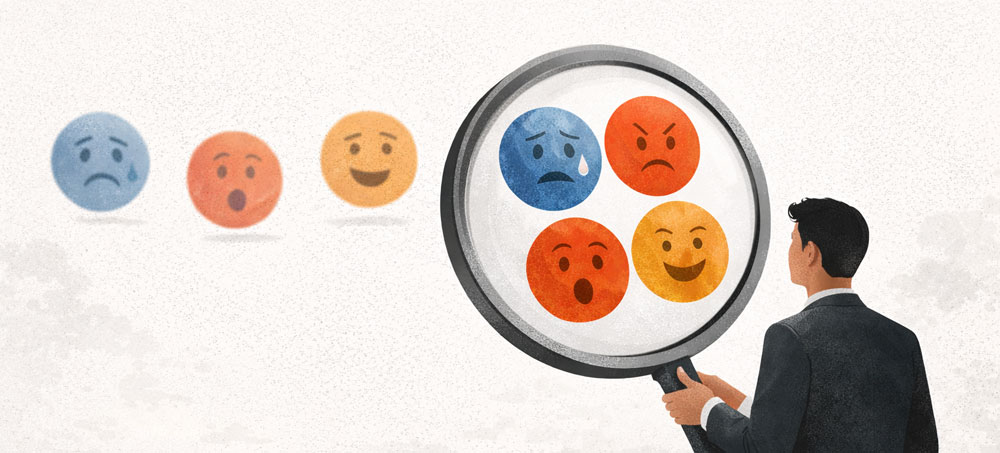
Triaging your work is not merely a cognitive process—there’s an emotional aspect that needs to be addressed. Actively ignoring things and saying no to people generates a range of emotions that exert a powerful influence on your choices and behavior. This is precisely what makes triage so difficult, and until you acknowledge its emotional dimension, your efforts to control your workflow through primarily intellectual interventions are unlikely to succeed.
This process may well be occurring right now. A moment ago when you read the phrase, “no truly important people,” you probably flinched a little and thought it was somewhat callous. I flinch when I read it, too, and I wrote it! But this understandable response is exactly why you devote time and attention to people who don’t truly merit the investment. There’s a fine line between effective triage and being a jerk, and many of us are so worried about crossing that line that we don’t even get close.
To triage effectively, you need to enhance your ability to manage these concerns and other, related emotions (and “manage” does not mean “suppress”). As University of Southern California neuroscientist Antonio Damasio has written (and as you’ve surely experienced firsthand), emotions can undermine effective decision making by “creating an overriding bias against objective facts or even by interfering with support mechanisms of decision making such as working memory.”
And this is exactly what happens to you when the active choice to ignore—the decision at the heart of triage—generates emotions that you fail to fully grasp.
When confronted by overwhelming demands on your time, you may feel anxious, scared, resentful, or even angry, but you’re often not sufficiently aware of or in touch with these emotions to make effective use of them. They flow through you below the level of active consciousness, inexorably guiding your behavior, but in many cases—and particularly when under stress—you fail to recognize their influence and miss opportunities to make the choices that will best meet your needs.
Improved emotion management is a complex undertaking, but there are a number of steps you can take that help:
Change your mindset. Adjust your mental models to reflect emotions’ importance and the role they play in rational thought and decision making. Your beliefs shape your experience.
Take better care of yourself physically. Regular exercise and sufficient sleep demonstrably improve your ability to both perceive and regulate emotion.
Engage in some form of mindfulness routine. Meditation, journaling, and other reflective practices enhance your ability to direct your thoughts, helping you sense emotion more acutely, and provide a new perspective on your experiences, helping you make sense of those emotions.
Expand your emotional vocabulary. Having a wider range of words to describe what you’re feeling not only helps you communicate better with others, it also helps you more accurately understand yourself.
The ultimate goal is to expand your comfort with discomfort—to acknowledge the difficult emotions generated by the need to triage so that you can face your endless to-do list, your overflowing inbox, and the line of people clamoring for your attention and, kindly but firmly, say no.
Ed Batista is an executive coach and Lecturer at the Stanford Graduate School of Business. He is the author of The Art of Self-Coaching (Harvard Business Review Press, 2017) and a contributor to the HBR Guide to Coaching Your Employees; he writes regularly on issues related to coaching and professional development at edbatista.com. Follow him on Twitter: @edbatista.











Please Log in to leave a comment.