Use Learning to Engage Your Team
An interview with Whitney Johnson by Sarah Green Carmichael
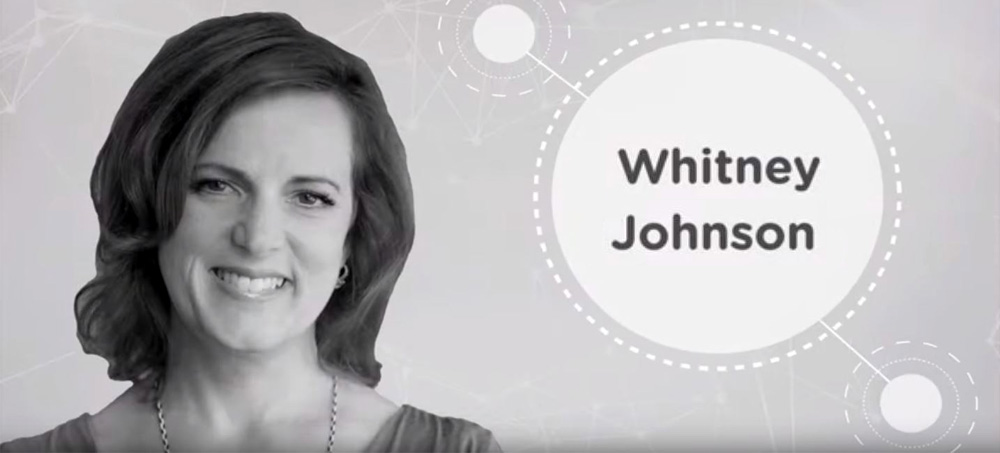
WHITNEY JOHNSON, CEO OF DISRUPTION ADVISORS, a change and growth management consultancy, argues that on-the-job learning is the key to keeping people motivated. When managers understand that and understand where the people they manage are on their individual learning curve—the low end, the sweet spot, or the high end—employees are engaged, productive, and innovative. Johnson is the author of Build an A-Team: Play to Their Strengths and Lead Them Up the Learning Curve and Smart Growth: Grow Your People to Grow Your Company.
Idea in Brief
- The Problem
On-the-job learning is crucial for maintaining employee motivation. Without opportunities for growth, employees may feel bored and stagnant, which can negatively impact productivity and innovation.
- The Solution
Managers should focus on understanding where their employees are on their individual learning curves—whether they’re at the low end, the sweet spot, or the high end. By providing continuous learning and development opportunities tailored to these stages, managers can keep employees challenged and engaged.
- The Benefits
Aligning tasks with employees’ current learning stages can create a more dynamic and motivated team environment. This approach enhances engagement, boosts productivity, and fosters innovation, ultimately leading to a more effective and satisfied workforce.
Which person would you rather hire: someone who has all the skills and experience to hit the ground running, or someone who might need additional training? Many managers are tempted to hire the person who can just do the job well from day one.
Whitney Johnson: Great point, because when managers hire that person who doesn’t need any training to come in, then that person’s bored really quickly, and then you’ve got a whole other problem.
That’s why Whitney Johnson urges managers to hire candidates who will have to learn on the job. As it turns out, learning is essential to engagement. You say that everyone follows S-shaped learning curves. Tell us how that works.
Picture a letter S and then think about a new job, role, project, or business. When you start at the bottom of the S, it’s like the bottom of a wave. You’re very inexperienced. There’s going to be this time when you’re feeling confused. There are all these different puzzle pieces, and you don’t quite know how to put them together. That’s typically going to last for up to six months to sometimes as long as a year, where you’re at the bottom of that S. The reason it’s important to be aware of that is that it helps you avoid the discouragement that can come where you get home from work and think, I have no idea what I’m doing. Well, you’re not supposed to, because you’re at the bottom of the S.
Then, as you put in that effort, you start to move to the knee of the curve, or the tipping point, where your competence starts to accelerate, and you’re feeling incredibly confident; you’re feeling engaged. This is the exciting part of the learning curve where you know enough but not too much. You’re typically in that place for a year, maybe up to three or four years at most if your boss is giving you stretch assignments.
As you move up to the top of the S, it flattens out, and you put in the time to be in mastery. You know exactly what you’re doing, which is good because you’ve got this great ability to do things; it’s super easy for you. But because you’re in mastery and you’re no longer enjoying those feel-good effects of learning, you can get bored. Once you get to that top point, after four, maybe five years at most, it’s time for you to disrupt yourself, start all over: go to the bottom of a new curve to learn, to leap, and then repeat over and over again with projects, with your career, with businesses, and so on.
So the idea is that managers will have different people on their team who are at different stages, right?
If you think about it, just as an ocean is made up of many waves, your organization is basically a collection of S curves. You build an A-team where you’re optimizing for innovation [or] the ability to manage through change with 60% of your people in the sweet spot of that learning curve, where they’re about to peak or crest; you’ve got 20% of your people at the low end, beginning to swell; and you’ve got 20% at the high end who are about to crash.
Why don’t you want everyone on this exciting part of the learning curve? Why is it a good thing to have some people at the low end and some people at the high end?
We’re trying to optimize for innovation. At the low end of the curve, you’re inexperienced, so you’re going to be slower. But the upside of that is that you’re not blinded by familiarity. You ask lots of different questions, like, “Why do we do it like this?” That can be kind of pesky—like a three-year old asking “Why, why, why, why, why?” And yet if we’re willing to be patient with those questions and also not be threatened because they’re saying, “Why do you do it like this?” then those questions are going to uncover all sorts of opportunities for your organization. You need people who are inexperienced.
You also need people who are in mastery because if you think about the high end of that curve as a mountaintop, they’ve got perspective. They’re not necessarily going to be innovative. But they’re a library of information. If they’re willing to transmit that and help other people understand, it can be tremendously valuable. Of course the risk is if they stay too long, they’re going to get bored, and that plateau becomes a precipice. When people are bored they either leave or they stay but get complacent. There’s downside in both instances.
I want to talk a little bit more about the sweet spot of the curve, because the fun part is in the middle, right? When you’re on that steep part of the curve and every day feels like you’re learning something new, you’re gaining traction. If more managers were able to get people in that mindset, what would the impact on the organization be?
Oh, tremendous. When you’re able to show up and think “What do I get to learn today? What do I get to figure out, and who do I get to figure it out with?” The question is, how do you make sure that continues to happen? Because once you get people in the sweet spot, you want them to stay there for a few years. The way to do that is to give them stretch assignments. Don’t back away from giving them things that are hard, because that’s when you’ll get great work from them every day. You need to provide Goldilocks assignments—not too hard, not too easy.
There are some folks who may not want those kinds of stretch assignments. They’re comfortable in their roles. They enjoy that kind of predictability of work every day. And while there is a kind of risk that those people will get bored, there are some people who are comfortable working to live rather than living to work, who want their work to stay the same. How do you deal with that?
Well, it depends. If you’re trying to push them and they’re like, “Nah, I don’t want more,” and their work is kind of middling, then that’s an issue. If you’re pushing someone and they’re showing up to work every day and they’re doing a really good job, then they’re still in the sweet spot. That’s one of the things you have to gauge because sometimes there are situations where a person is doing really good work and you look at them and say, “I can see more for this person.” And there could be more if they wanted it, but what they really want is to do really good work every day and then go home, and that’s OK. That doesn’t mean they’re at the high end. It means they’re in the sweet spot. It’s just that their sweet spot looks a little different than what you think their sweet spot could look like.
The final stage of the S curve is to be in mastery. When someone is in that position and the stretch roles have done their job, it’s time to do something else. What kinds of roles can these people play in our organizations?
There are a couple of different answers. When a person gets to the top of the curve, they need to come to you and say, “I feel like I’m at the top of my curve. It’s time for me to do something new.” But remember, that’s a scary proposition. Because sometimes that’ll mean that they’ve just pushed themselves off the island by asking that question. So we need to be aware of how much power we wield in that situation.
The conversation should go something like:
You’re at the top of your curve. In about six to nine months, I’m going to help you jump to a new curve. Here’s what I need you to do in the meantime. First, like the pace car in the Indy 500, I need you to set the pace for the people at the launch point and the sweet spotters on our team. I don’t want to hear, “I’ve paid my dues”—that’s verboten. Second, I need you to train your successor so that when you jump to a new curve, we still have institutional knowledge in place. And third, before you jump, I need you to facilitate collaboration among the other team members.
Next, it’s time to applaud their achievements. Too often once a person gets to the top of a curve, they immediately want to go to the next. But first pause to celebrate what they’ve done—as you would a birthday or an anniversary. Note what happened on your team that was positive because this person was on this S curve at this point in time. Take a moment to mark that because it lets the person know, “I value you, I see you, and we appreciate you for what you’ve done.” Then, if you haven’t already, help them identify a new curve.
How do you figure out where people are on their learning curve?
There are time-based milestones and cues to look for, say, when someone has been in a role for six months to a year, as we discussed earlier.
Another way to figure out where people are on their learning curve is to ask yourself four questions. First, “Is this person playing where no one else is playing?” Sometimes we hire people to do a job that it turns out someone else on the team is already doing because their role has shifted and morphed over time in response to market needs. So, make sure that this person is doing a job that no one else on the team is already de facto doing.
Second, ask yourself, “Are they playing to their strengths?” As their manager, it’s important to not only identify a person’s strengths—their superpowers—but to persuade them to use them. Because your superpowers are so reflexive and easy for you, like the air that you’re breathing, you don’t value it. Part of your responsibility as a boss is to not only identify a person’s strengths but then to make sure that they know those strengths are valued.
Third, find out if the work is hard or debilitating for this person. If they’re brimming with energy, then it’s the good kind of hard. If they seem like they’re dreading their work and they’re discouraged, those may be symptoms of a flatlining curve.
Finally, you monitor momentum. And momentum looks like, for example, this week my employee seemed like they knew what they were doing for four hours out of the 40-hour week, and next week it’s eight hours. Your starting point is to a large degree irrelevant. What you want to measure is are they growing and how fast?
So you’re evaluating if they’re playing where no one else is playing, playing to their strengths, finding the work hard but not debilitating, and gaining momentum. And if you can answer yes to all four questions, then growth is on its way. If you’re answering no to two or more, then it may be the wrong growth curve.
When someone is making that leap from being superb at something and really skilled from the top of their curve to the bottom of a new curve, what advice do you have for managers?
I would say first of all, help them and be patient. Walk them through the S curve and say, “You’ve now jumped to the bottom of this learning curve. You are going to be inexperienced. You may be frustrated for about six months. And then one day you’re gonna wake up and say, Ah, I’m not frustrated anymore!’ That’s because your brain has started to piece things together.” The other thing I would say is, “If it’s scary and lonely, you’re on the right path. So be patient with yourself.”
You also need to have that person’s back. It’s important for you to say to your boss, “We’re going to try this new project; we’re going to put this person here. We think there’s a 70% chance it’s going to work . . . but there’s a 30% chance it won’t. If it doesn’t work, do I have your word that you’ll have our back?” Too often we look at things in a binary way as opposed to talking things through; this is what it might look like, this is what it might not look like. Let’s proceed and be willing to deal with the murkiness that’s going to come knowing that we’re suboptimizing the present to optimize the future.
If we’re continually pushing the people who work for us to try new things and experiment and learn, some degree of failure is inevitable. What can managers do to really make the most of those learning opportunities?
First, as I mentioned, is calibrating the risk and having a person’s back. Second is to remember that failure is an event, not a person, that it’s shame that limits disruption, not failure. Whether we choose to see an experience as a failure or success is a choice. Shame is what’s going to push a person back down the curve so that they’re not able to continue to move up, so it’s important that we as managers not shame them in some way. But once that emotional side of it is dealt with, which I would argue is the most important part—or at least the part that people struggle to deal with the most—I would ask yourself, “What’s the ROI on this failure? What valuable lesson have we learned because of this failure?”
Please Log in to leave a comment.