The Real Job of Great Leaders in the AI Age: Building The Right Environment
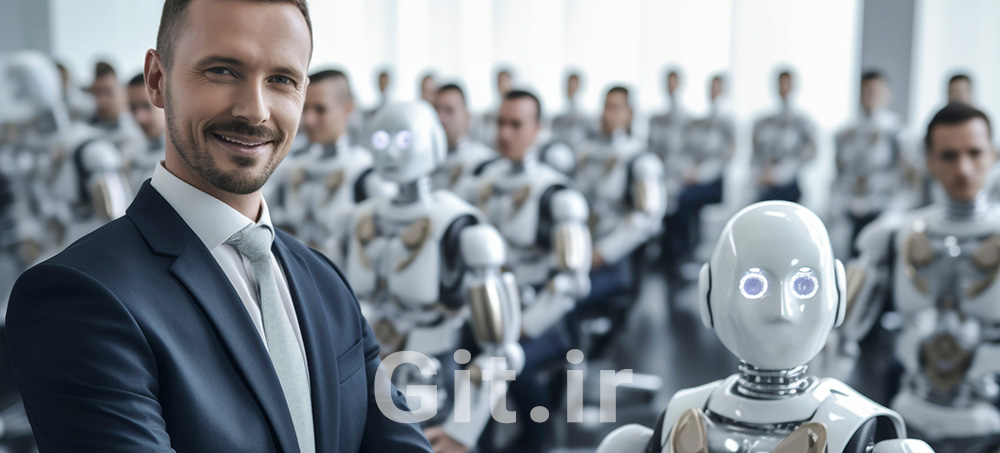
The AI revolution has leaders scrambling to decode the future of work. They’re desperately trying to anticipate what tomorrow’s workplace will demand so they can develop those capabilities now.
Looking ahead is important. But we can’t forget that one of the most important leadership lessons comes from the past – 1936, to be exact. This was the year that psychologist Kurt Lewin first explained how critical someone’s context is to their behavior. His work led to one of the most enduring lessons from behavioral science: lasting change happens when individual motivation meets the right environment.
The organizations getting AI transformation right understand they’re not just managing technology adoption. They’re also orchestrating behavioral transformation. Great leaders will ask: What parts of my organizational environment encourage (or discourage) employees from upskilling? How do we adapt the environment to ensure readiness for not only this current transformation, but future ones?
The Curiosity vs. Capability Challenge
Here’s where many leaders go wrong. They prioritize fostering curiosity about AI over building real capability. While curiosity-driven programs successfully tackle the problem of understanding what AI can do, they fall short on enabling workplace transformation.
Real AI capability goes beyond knowing how to use tools. It requires habit formation, consistent practice, workflow integration, and measurable efficiency improvements. Another way of saying this is that organizations often focus on shifting awareness rather than behavior, to their detriment.
The Four Pillars of an AI-Powered Environment
Changing behavior is complex. There is no one-size-fits-all process, and the most effective levers will differ across organizations. Even so, research and experience point to four practical ideas for leaders to consider.
1. Create Zones for Intelligent Risk-Taking
The foundation of any learning environment is psychological safety, but not the shallow version that many organizations attempt. Real psychological safety for AI upskilling means creating what researchers like psychologist Amy Edmondson call “learning zones” where employees can engage in the specific risks that AI adoption requires: experimenting with new tools, admitting when AI outputs don’t make sense, and redesigning familiar workflows.
This goes beyond parroting platitudes like “it’s okay to make mistakes.” Leaders need to back up words with action by modeling specific behaviors: sharing their own AI learning failures, asking employees to critique AI-generated work, and surfacing moments when someone chooses human judgment over AI recommendations. When team members see leaders actively learning and making mistakes with AI tools, it signals that this kind of intelligent risk-taking is expected.
2. Strengthen Skill Fitness Everyday
You can’t become physically fit by only showing up at the gym once a month. Health requires building small, daily habits, like taking the stairs instead of the escalator.
Developing skills fitness requires the same mindset. Sustainable skill development requires embedding learning opportunities directly into daily work rather than treating them as separate activities.
This means identifying specific, recurring tasks where AI can add value and building experimentation time directly into those processes. Instead of asking employees to attend AI training after hours, leaders should allocate 15% of project time for team members to test AI approaches to their current work. The goal isn’t just to learn AI tools, but to systematically identify where human-AI collaboration creates the most value.
Consider the difference between telling a marketing team to “learn about AI” versus asking them to use AI tools for their next campaign brief and document what worked, what didn’t, and what they’d do differently. The latter creates capability; the former often just creates awareness.
3. Align Incentives with Adaptive Behaviors
Most organizations reward efficiency and expertise, but successful AI transformation requires different behaviors: experimentation, cross-functional (and agentic) collaboration, and admitting (and navigating) uncertainty. If your performance reviews still primarily measure individual productivity and domain expertise, you’re inadvertently discouraging the behaviors you need for a thriving future workplace.
Future-ready organizations are redesigning their reward systems to recognize 'adaptive' skills. These skills, such as critical thinking, effective communication, and problem-solving, enable individuals to adjust their behavior when faced with new or unpredictable circumstances.
Developing adaptive capacity by aligning reward structures is critical not only for this moment but for the many technological transformations that will continue to create volatility.
4. Build Systems for Continuous Capability Assessment
Unlike traditional skills training, developing AI fluency requires ongoing calibration to move from acquisition, to mastery, to recency. The technology evolves rapidly, use cases emerge constantly, and what worked last month might be obsolete today.
Rather than treating AI skills as a checkbox to complete, leaders should build systems for continuous assessment and development. Think of this as “hydrating” your badges to demonstrate that they are still valid through short quizzes, role plays, labs or videos.
This could also include regular “AI audit” sessions where teams review how they’re using AI tools, what new capabilities they’ve discovered, and where they’re hitting limitations. It could involve creating internal communities of practice where employees share AI use cases and challenges across departments.
The goal is to shift from the traditional training model (i.e., learn a skill once, apply it forever) to a continuous upskilling system where AI capability grows alongside the technology itself.
Towards Collective AI Intelligence
While these four pillars focus on creating the right environment for individual behavior change, the deepest transformation happens when organizations develop what we might call collective AI intelligence. This is the ability to leverage AI not just in individual tasks, but in how teams collaborate, make decisions, and solve complex problems together.
This requires leaders to think beyond upskilling programs and toward organizational redesign. How do meeting structures need to change when AI can generate real-time summaries and action items? What new roles emerge when AI handles routine analysis, freeing humans for higher-level synthesis and judgment? How do decision-making processes evolve when AI can rapidly test multiple scenarios?
These questions don’t have universal answers. They require experimentation within each organization’s unique context. But leaders who create environments where these experiments can happen safely and systematically will build organizations that actively shape how human-AI collaboration evolves.
At its core, the AI transformation is shaping up to be an opportunity for people to change how they work for the better. The real job of leadership is creating the space for them to exercise that new power wisely.
Please Log in to leave a comment.