Learn Smarter with NotebookLM
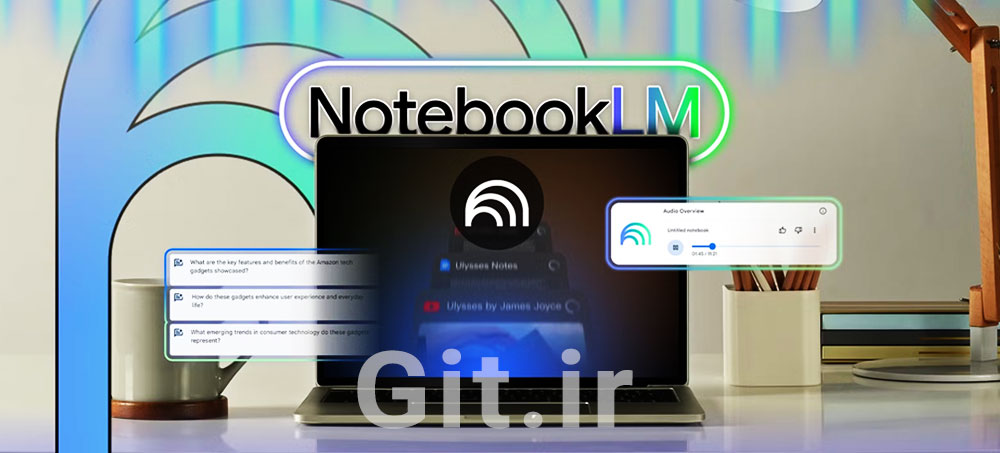
In today's world, our issue isn't "lack of information," but the absence of meaningful learning. Every day we read books, save articles, and take online courses, but what percentage of them actually stay in our minds and influence our decisions or behaviors?
The problem, most of the time, is the learning method, not the learning content.
We often collect knowledge, but don't integrate it into our thought structure. This is where tools like NotebookLM can make a difference.
NotebookLM isn't just a platform for summarization; it's a tool for thinking, organizing, and smart learning, especially for those dealing with high volumes of scientific or educational resources.
Table of Contents
- Part One: NotebookLM; From Notes to Conceptual Understanding
- Part Two: Specify the Learning Goal
- Part Three: Step-by-Step with NotebookLM for Effective Learning
- Part Four: NotebookLM as a Personal Learning Coach
- Part Five: Common Mistakes and Professional Tips
- Part Six: The Future of Personal Learning with NotebookLM
- Conclusion: From Collecting to Integrating Knowledge
Part One: NotebookLM; From Notes to Conceptual Understanding
NotebookLM can be considered the next generation of "source-based learning" tools. This tool analyzes the resources the user uploads (like PDFs, notes, articles, or lecture slides) and responds based on them. Meaning, if you give it a collection of university notes, book summaries, or educational resources, NotebookLM extracts insights and conceptual connections directly from that data.
Compared to tools like ChatGPT that use their general memory, NotebookLM focuses solely on the data you provide. That's why it's more precise and reliable for deep study, reviewing concepts, and preparing for specialized learning.
Part Two: Specify the Learning Goal
No smart tool creates effective learning without a clear goal. NotebookLM shows its greatest value when you know exactly what type of learning you're seeking.
Before starting, ask yourself:
- What concept do I want to understand or master?
- Why is this topic important to me?
- Where am I going to apply this knowledge?
For example, suppose you're a student preparing for an exam in "Organizational Behavior Management."
Instead of aimlessly reviewing notes, upload them to NotebookLM and ask:
- "What are the key concepts of motivation theories and how do they differ?"
- "In which sections of the notes are examples of applying these theories in the workplace mentioned?"
As a result, the model creates a learning map for you; a collection of related concepts that creates structured understanding instead of memorization.
Part Three: Step-by-Step with NotebookLM for Effective Learning
Step 1: Creating a Thematic Notebook
Dedicate each notebook to a specific learning domain. For example, "Behavioral Economics," "Language Learning," or "Advanced Statistics."
In each notebook, only upload resources related to that topic so the model maintains its conceptual focus.
Step 2: Uploading Precise and Coherent Resources
NotebookLM is most useful when your resources are coherent. For example, a collection of university notes, book summaries, or reference article PDFs.
If your topic is learning English, you can upload a collection of lessons, grammar tips, and examples, and ask the model to create review exercises and conceptual understanding for each section.
Step 3: Question-Based Interaction
Interaction with NotebookLM is the heart of the learning process.
Instead of superficial questions like "What is this chapter about?", ask questions that require reasoning:
- "What differences are there between this author's view and social learning theory?"
- "If I want to apply this model to my daily study, what steps do you suggest?"
With such questions, NotebookLM goes beyond summarization to analysis and understanding.
Step 4: Generating Review Tools
One of NotebookLM's key applications is generating personal review tools. You can ask it to create conceptual flashcards, review tests, or even audio summaries based on uploaded resources.
For example, if you're learning Python programming, you can say:
- "Generate question-and-answer educational content for reviewing the main concepts of the chapter on loops."
Step 5: Periodic Review and Connecting Concepts
NotebookLM gradually becomes your personal learning journal.
Every time you add a new resource, the model updates its understanding and creates new connections between concepts.
This is what cognitive psychologists call semantic network reinforcement.
Part Four: NotebookLM as a Personal Learning Coach
If you use NotebookLM correctly, it can act like a digital personal coach; not for direct teaching, but for guiding your own learning.
For example:
If you're learning "Design Thinking," ask it to summarize the steps of this process from the resources and provide practical examples for each step.
If you're learning philosophy or social theories, ask: "What similarities are there between John Locke's and Rousseau's views on education?"
Or if you're learning a new language, say: "From the examples in the notes, create five sentences for practicing present perfect in conversation."
In all these cases, NotebookLM doesn't just answer; it helps your mind engage with the concepts.
That's why its role is not "teacher" — but "learning coach."
Part Five: Common Mistakes and Professional Tips
NotebookLM, although advanced, is not a replacement for human thinking.
There are three common mistakes among learning users:
- Accumulating Resources Without Purpose: Uploading dozens of files doesn't lead to better understanding; sometimes it just clutters the mind more.
- Complete Trust in Summaries: Summaries should be the beginning of learning, not the end. Always cross-check with the original text.
- Lack of Personal Feedback: If you only use NotebookLM for answers, your learning becomes passive. It's better to use its outputs in the form of exercises and recitation.
Part Six: The Future of Personal Learning with NotebookLM
NotebookLM is part of the larger trend of "adaptive learning" — learning that adjusts based on each individual's thinking style and needs.
In the future, tools like it can design your learning path based on your cognitive behavior: understand where you make mistakes, where you have deeper understanding, and how to adjust your path.
But the core principle remains: technology is the tool, human thinking is the essence of learning.
NotebookLM can accelerate the learning process, but it can't replace mental engagement.
Conclusion: From Collecting to Integrating Knowledge
NotebookLM reminds us that effective learning means creating connections between concepts, not just reading them. If you use it for organizing resources, analytical questioning, and continuous review, you've essentially built a "second learning system" for yourself — a system that grows alongside your mind.
In a world where speed matters more than depth, NotebookLM helps bring depth back to learning.
If you're interested in exploring NotebookLM more deeply, the following courses can be a helpful starting point:
Please Log in to leave a comment.