What Is Digital Minimalism and Why Does It Matter?
You have probably experienced this yourself: you open your phone just to check a simple message, but a few minutes later you realize that half an hour—or even more—has passed while mindlessly scrolling through social media. Constant notifications, work messages outside office hours, negative news, and endless content gradually drain our focus, time, and even our mental calm.
Many of us feel that we are always “available,” yet at the same time we are less focused than before. Tasks remain unfinished, the mind feels exhausted, and we often feel there is no time left for personal life, family, or even real rest. In such situations, it’s natural to assume that technology itself is the problem.
But the reality is that technology is neither inherently good nor bad; the real issue lies in how we use it. This is where the concept of digital minimalism comes into play—an intentional approach to simplifying digital life, reducing mental clutter, and regaining control over time and attention.
In this article, we explore in a practical and easy-to-understand way what digital minimalism is, why it matters, what problems it addresses, and how you can apply it in everyday life with simple, actionable steps—without needing any special tools.
What Is Digital Minimalism?
In this section, we explain the concept of digital minimalism in simple terms and show how it helps create a smarter and more intentional relationship with technology.
✔️ A Simple and Clear Definition of Digital Minimalism
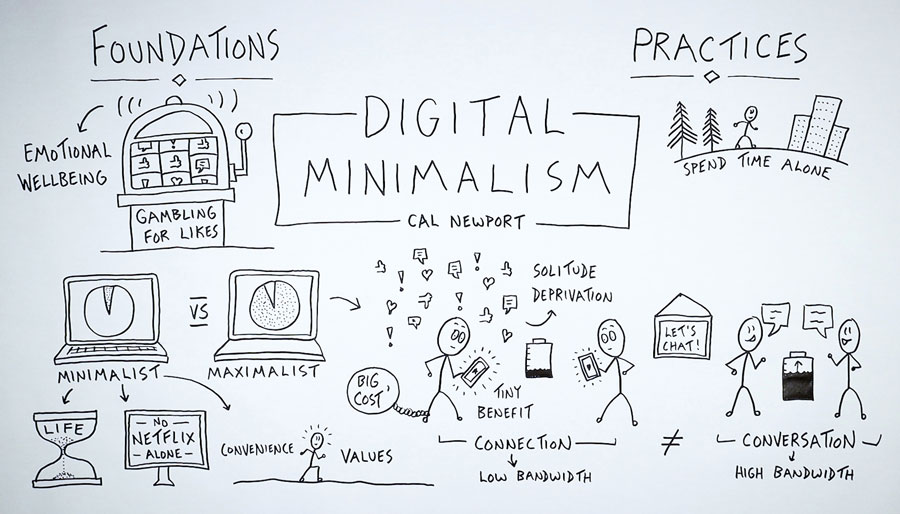
At its core, digital minimalism means using digital tools and services consciously, intentionally, and sparingly—so that technology serves your life, rather than your life revolving around technology.
In this lifestyle, before installing an app, joining a social network, or spending time online, we ask ourselves: “Does this tool truly support my goals, values, or quality of life?” If the answer is no, that tool is either removed or its use is strictly limited.
Digital minimalism does not mean completely giving up smartphones, the internet, or social media. Instead, it focuses on making deliberate choices and eliminating excess—much like minimalism in the physical world, where the focus shifts from accumulation to essentials.
✔️ Digital Minimalism vs. Digital Detox
Many people confuse digital minimalism with “digital detox,” even though the two concepts are related but not the same. A digital detox is usually a short-term, temporary action—such as taking a few days or weeks away from social media, turning off your phone during vacations, or drastically reducing app usage to give your mind a break.
A digital detox is more like a temporary pause. It allows the mind to step away from the constant pressure of notifications and information and helps individuals realize how dependent they have become on continuous technology use. While this can be very beneficial, if it doesn’t lead to lasting change, old habits often return.
Digital minimalism, on the other hand, is a long-term and sustainable digital lifestyle. The goal is not to eliminate technology or escape from it, but to build a balanced, intentional, and healthy relationship with digital tools. You learn when to use technology, why you’re using it, and how much is truly enough.
Simply put, a digital detox can be a great starting point for awareness and pause, but digital minimalism is the ongoing path forward—a shift where technology use becomes a conscious choice rather than an automatic habit.
Why Is Digital Minimalism Important?
In this section, we examine how simplifying your digital life can tangibly improve focus, mental calm, time management, and overall quality of life.
1- The Impact of Digital Minimalism on Focus and Mental Calm
One of the most important reasons digital minimalism matters is its ability to reduce digital distractions. Every alert, message, or notification interrupts concentration and forces the brain to expend extra energy just to return to the original task.
When unnecessary stimuli are reduced, the mind has space to calm down, organize thoughts more effectively, and experience deeper focus. This is especially valuable for people who engage in mental work, studying, or learning.
2- Better Time Management and Improved Quality of Life
A significant portion of our daily time is spent on our phones unconsciously. Once these moments are reduced, we often realize how much time becomes available for more meaningful activities. Managing smartphone use helps create more free time for exercise, reading, learning new skills, and genuine rest.
The result is a noticeable improvement in quality of life and a stronger sense of control over time.
3- Healthier Human Relationships in the Digital Age
Excessive use of smartphones and social media directly affects the quality of our relationships. Being physically present but mentally absent has become one of the most common challenges of the digital era.
Digital minimalism encourages more mindful presence in conversations, gatherings, and family relationships, helping build deeper and more meaningful human connections.
Common Problems in Today’s Digital Lifestyle
Despite its many benefits, modern digital life comes with hidden but serious challenges that gradually erode focus, time, and mental peace. Recognizing these problems is the first step toward a healthier and more conscious use of technology.
Digital Addiction: A Hidden but Serious Issue
Digital addiction is not limited to online games or excessive use of a single app. It also appears in subtler and more common forms, such as compulsively checking your phone, repeatedly opening social media without a clear purpose, heavy reliance on messaging apps, and endless scrolling.
In many cases, people don’t even realize their behavior has become addictive because these patterns gradually feel normal. Anxiety without a phone, restlessness during internet outages, or the constant need to “stay updated” are warning signs that technology is taking control of our attention and time.
Digital Distraction and Reduced Productivity
Digital distraction occurs when the mind constantly jumps between messages, notifications, and different apps. These frequent interruptions prevent deep focus and make important tasks more time-consuming and mentally exhausting.
The outcome is reduced productivity, more mistakes, mental fatigue, and dissatisfaction with daily performance—even when many hours are spent working.
The Impact of Social Media on Everyday Life
Social media platforms, through constant exposure to others’ lifestyles, unconscious comparisons, and fear of missing out, have a significant impact on our emotions and mindset. Prolonged, aimless consumption can intensify dissatisfaction, anxiety, lower self-esteem, and even mental burnout.
Conscious technology use helps redefine the role of social media—transforming it from a source of pressure into a controlled and beneficial tool.
How to Start Digital Minimalism
Starting digital minimalism doesn’t require drastic changes or deleting everything at once. With a few simple and mindful steps, you can gradually regain control over your technology use and reduce digital clutter.
1️⃣ Step One: Awareness of Digital Usage Patterns
The first and most important step in digital minimalism is awareness. Until you know exactly where your time and attention are going, real change cannot happen. For a few days, observe your digital behavior without judgment—how often you pick up your phone, which apps consume most of your time, and when you tend to get distracted.
This step requires honesty more than tools. The goal is to identify repetitive patterns that unconsciously drain your time and mental energy.
2️⃣ Step Two: Remove or Limit Non-Essential Tools
Once you gain awareness, it’s time to simplify. Identify apps, channels, and services that don’t add real value to your life. In some cases, deleting them is best; in others, limiting usage or turning off notifications is enough.
This isn’t about deprivation—it’s about freeing attention for what truly matters.
3️⃣ Step Three: Set Personal Rules for Technology Use
Digital minimalism cannot last without personal rules. These rules don’t need to be complex—simple and clear boundaries are more likely to become habits. For example, decide when to put your phone away, when to check social media, and which spaces should remain completely phone-free.
Over time, these rules create a stronger sense of control, calm, and satisfaction.
4️⃣ Step Four: Intentionally Replace Activities
Digital minimalism isn’t just about removal. If you eliminate an activity, you need a meaningful replacement—or old habits will return. Instead of mindless scrolling, choose activities that are both enjoyable and growth-oriented, such as reading, writing, exercising, or learning a new skill.
Access to focused and practical educational content plays a key role here. Using courses from the Git platform—especially in the area of personal skill development—allows you to turn freed-up time into real opportunities for learning, growth, and deeper focus. Beyond personal development, a wide range of educational topics is available, enabling each individual to choose learning paths aligned with their goals and interests.
Practical Exercises and Tips to Reduce Phone Dependence
In this section, you’ll find simple, practical strategies you can apply immediately—without special tools—to gain better control over phone usage.
1- Turn Off Non-Essential Notifications
Notifications are one of the main sources of digital distraction. Even a brief alert disrupts concentration and makes returning to focused work more difficult. Many people encounter dozens—or even hundreds—of unnecessary notifications each day without realizing it.
Start by reviewing your apps and keeping only truly essential notifications, such as important calls or urgent messages. Disabling alerts from social media, online stores, and games can quickly create noticeable mental calm.
2- Set Phone-Free Time Blocks
One effective way to reduce phone dependence is to define specific periods without using your device. These can be short but consistent—such as during meals, before bed, or right after waking up.
Even 30 to 60 minutes a day without your phone gives the mind a chance to exit reactive mode and regain natural focus. Over time, this improves mental calm, communication quality, and presence in the moment.
3- Use Social Media Intentionally
Without clear intention, social media quickly consumes time and mental energy. Intentional use means knowing why you’re opening an app and when you plan to leave it.
Setting a specific daily time limit and sticking to it significantly helps with time management, reduces mental comparisons, and lowers phone dependence.
4- Try Short Digital Detox Periods
A digital detox doesn’t mean permanently disconnecting from technology. Instead, it’s a temporary reset for habits. Weekends or holidays can be ideal times to significantly reduce phone use.
During these periods, observe how your mind responds, how your focus changes, and how your overall mental state feels. This experience often strengthens motivation to continue the digital minimalism journey.
Digital Minimalism and Personal Growth
Digital minimalism isn’t just about reducing phone usage—it’s closely tied to personal growth and intentional progress in life. When unnecessary digital consumption is reduced, time and mental energy are freed, creating space for learning, planning, and focusing on meaningful goals.
For example, someone who spends several hours a day scrolling through social media can, through digital minimalism, redirect part of that time toward learning a new skill, reading, or career planning. In this way, reducing digital clutter directly leads to improved focus, mental clarity, and purposeful progress.
Exploring educational resources such as the Digital Minimalism book summary can also provide deeper insight and inspiration for adopting this lifestyle.
Conclusion: A Small Change with a Big Impact
Digital minimalism is a conscious decision to live better in the age of technology. With a few simple actions—such as managing phone usage, reducing dependence on devices, and using technology intentionally—you can significantly improve focus, mental calm, time management, and overall quality of life.
You don’t need to change everything at once. Start with small steps, observe the results, and gradually build a healthier digital lifestyle—one in which technology is your tool, not your master.
Please Log in to leave a comment.